



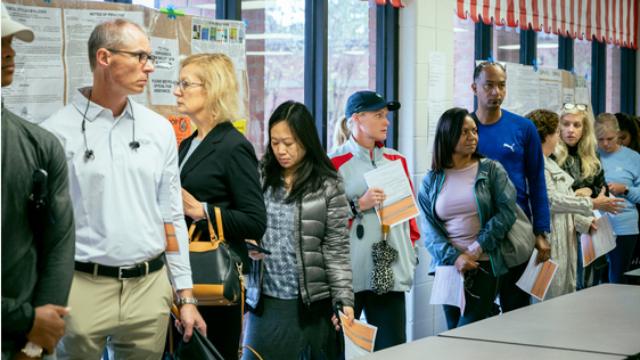
Georgia has crossed a major demographic threshold. For the first time, non-Hispanic Whites are no longer a majority in the state.
According to the latest U.S. Census Bureau estimates as of July 2025, Georgia’s total population stands at approximately 11.3 million. Non-Hispanic Whites make up 48.8% of the population. Black or African American residents are around 33%, Hispanic or Latino residents 11.6%, Asian residents about 5.2%, and those identifying as two or more races around 2.6%.
Between 2020 and 2025, the state’s population growth was driven heavily by new residents from Hispanic (40%), Black (33%), and Asian (20%) backgrounds. During that same period, the non-Hispanic White population declined by roughly 25,000.
Demographers had not projected Georgia becoming majority-minority until at least 2060. The shift happened more than three decades earlier than expected.
The reasons are straightforward. High levels of legal immigration, including through programs like H1B visas, combined with birthright citizenship for children of non-citizens, have accelerated the change. Native birth rates among the existing White population have remained lower, while migration patterns brought in large numbers from other countries and regions.
Both major parties bear responsibility for policies that facilitated this outcome. Decades of expansive immigration frameworks, guest worker programs, and failure to prioritize assimilation or enforcement have produced results that many Americans did not anticipate happening this quickly in states like Georgia.
Georgia is not alone. Similar demographic transitions are underway in other parts of the South and Southwest. These shifts have real implications for culture, politics, language, and social cohesion. When a state’s founding population becomes a minority in its own territory decades ahead of schedule, it raises legitimate questions about long-term sustainability and what kind of country is being built.
The census numbers are simply data. But they reflect policy choices made over many years. Americans deserve an honest conversation about immigration levels, legal pathways, and what kind of nation we want to preserve for future generations. Demographic reality is moving faster than many predicted — and faster than many are willing to discuss openly.
—